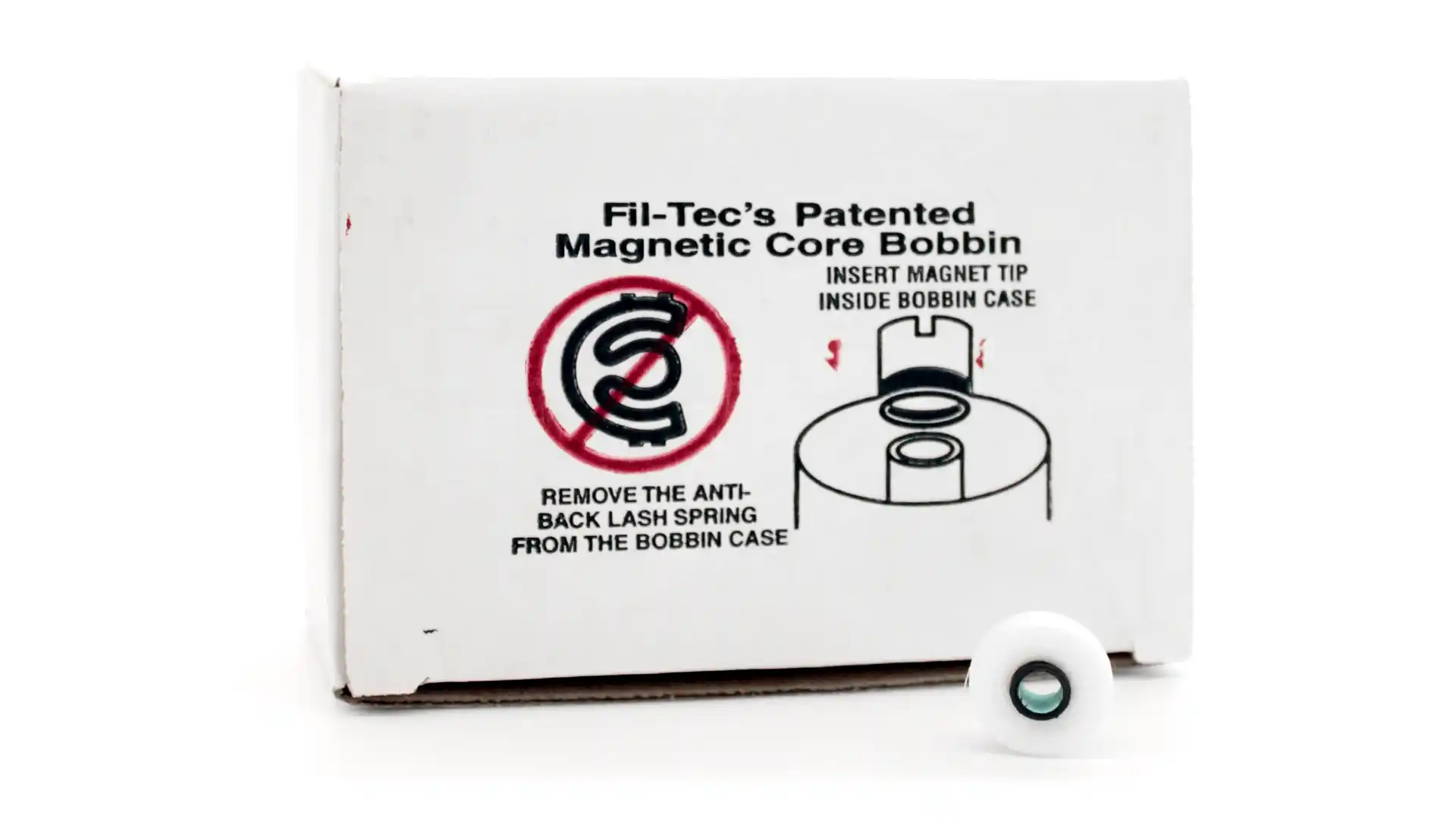

Why a Magnetic Bobbin Means Flawless Embroidery
The hidden problem: an emptying bobbin speeds up
A full bobbin winds thread to about 20 mm across; a nearly empty one is just 6 mm. As thread runs out, the wind gets smaller — so the bobbin has to spin faster and faster to feed the same thread. Near the end of a bobbin it turns up to 3.3× faster than when it was full.

Speed + a light paper core = resonance
A paper-core bobbin is light and rarely wound evenly. At those higher speeds it reaches a resonance zone — it vibrates, and bobbin-thread tension spikes and drops out of control. That is exactly when you see looping, puckering, thread breaks, and stitches that look worse as the bobbin runs down.

The magnetic bobbin solution
A magnetic bobbin uses a built-in magnet to apply smooth, constant braking the whole time the machine runs. It damps the vibration and holds thread tension steady from full to empty — so the last stitch looks just like the first. No resonance, no surprise tension changes, no chasing the problem.
| Cheap paper bobbin | Magnetic bobbin | |
| Thread tension | Drifts and spikes as the bobbin empties | Constant, magnet-controlled to the last stitch |
| Near-empty (high RPM) | Vibrates — hits the resonance zone | Stays damped and stable |
| Stitch result | Looping, thread breaks, rework | Clean, even, repeatable stitches |
| Downtime | Frequent stops and rethreading | Fewer stops, higher productivity |
| Lifespan | Disposable — buy again and again | Reusable and durable |
The bottom line
Consistent tension is consistent quality.
A magnetic bobbin removes the single biggest cause of bobbin-side defects — and pays for itself in less rework, fewer looping, and machines that keep running.
Product number 2: O-000-0045
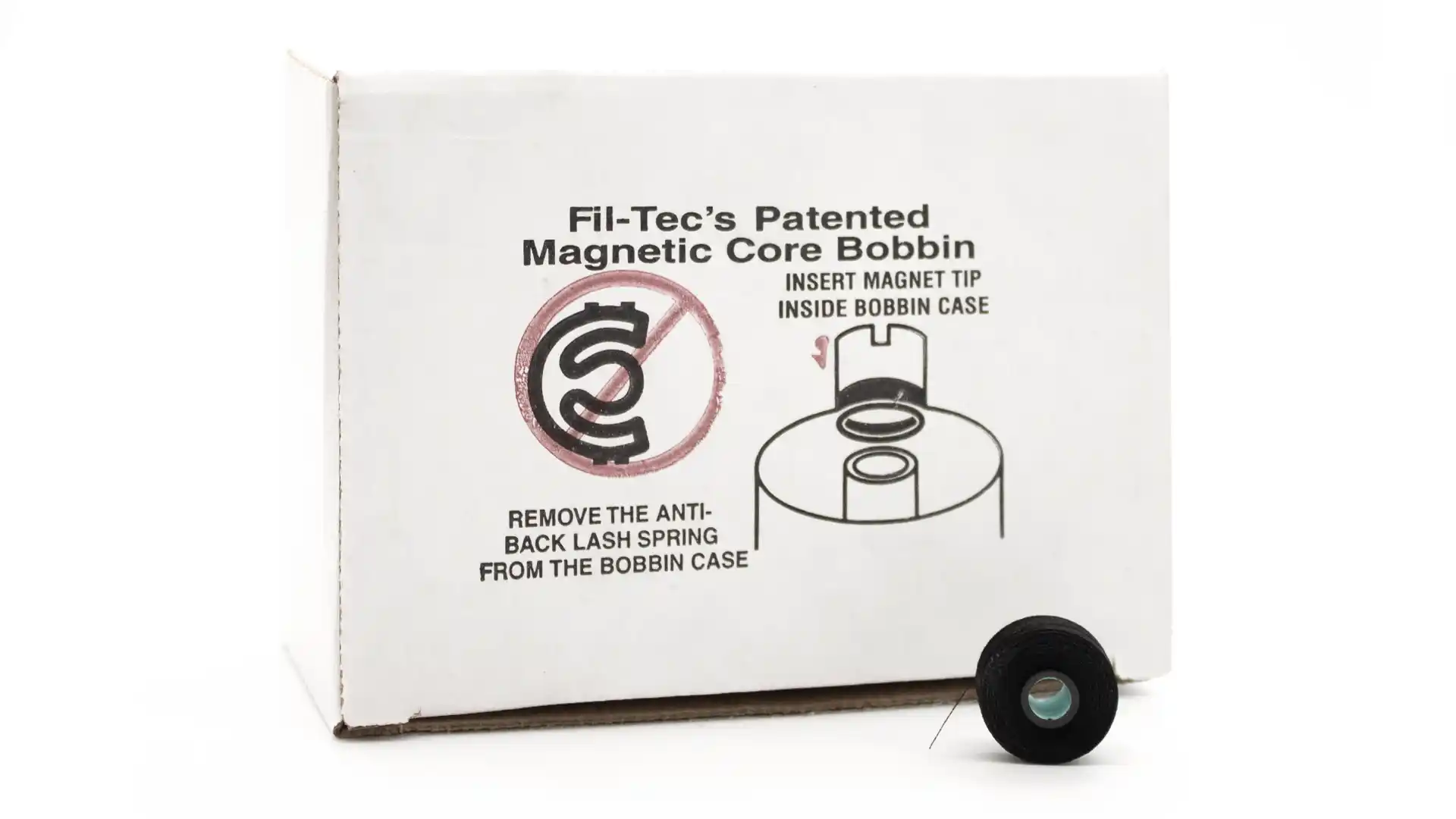
Product number 2: O-000-0044